Spices: the essential ten and how to use them
Spices are the cheapest way to make home cooking taste like restaurant food. Most kitchens have twelve jars and use three. This guide fixes that: the essential ten, how to store them, and the flavor families that tell you what goes with what.
The essential ten
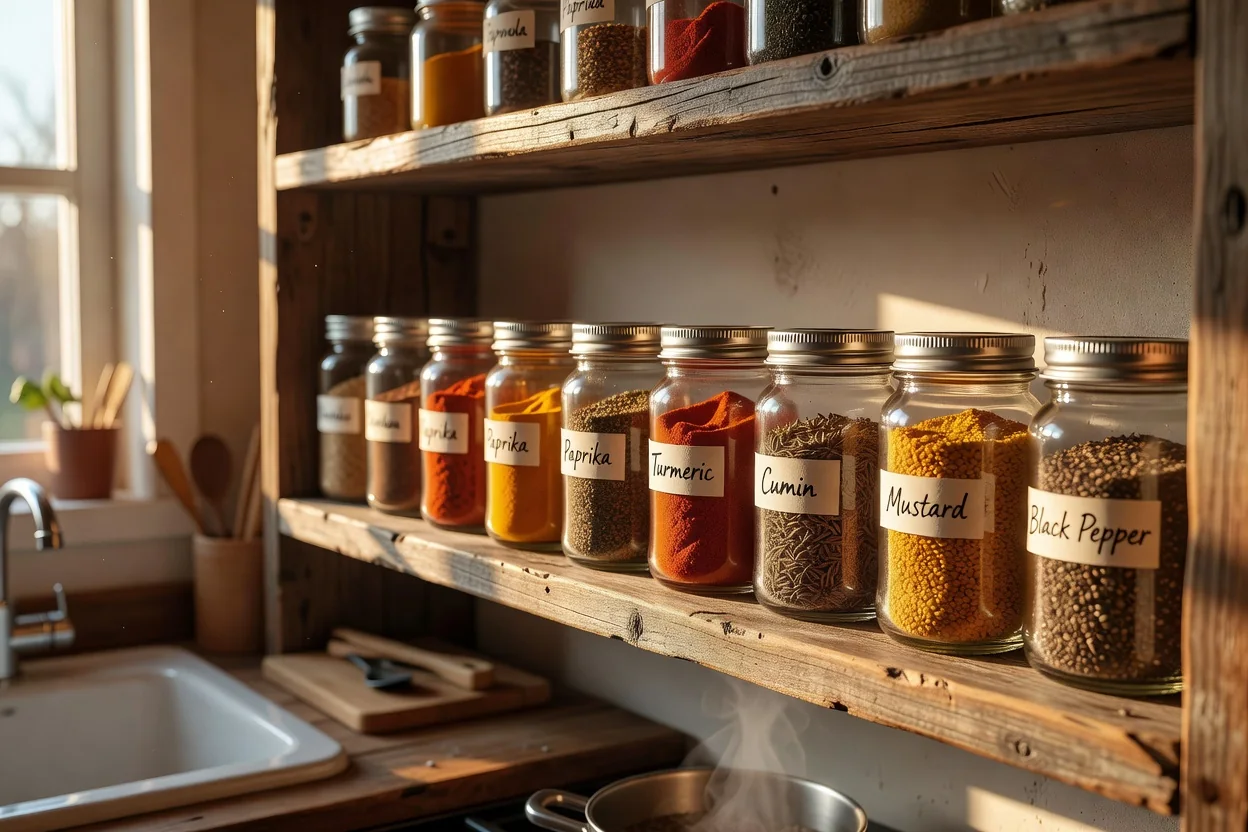
Cumin, paprika, coriander, turmeric, black pepper, chili flakes, cinnamon, oregano, garlic powder and bay leaves. With these you can cook Mexican, Indian, Middle Eastern, Mediterranean and most of European food without a special trip.
Flavor families cheat sheet
| Cuisine | Core spices | Finishing note |
|---|---|---|
| Indian | cumin, coriander, turmeric | garam masala at the end |
| Mexican | cumin, chili, oregano | lime and cilantro |
| Mediterranean | oregano, paprika, garlic | olive oil and lemon |
| Middle Eastern | cumin, cinnamon, coriander | sumac or za'atar |
Storage and freshness
- Whole spices keep a year; ground spices fade in six months.
- Heat and light kill flavor — no jars above the stove.
- Smell test: if it smells like dust, it tastes like dust.
- Toast whole spices in a dry pan for 60 seconds to wake them up.
The layering rule
Spices go in at three moments: bloomed in oil at the start for depth, added mid-cook for body, and finished fresh at the end for brightness. Using only one moment is why home curries taste flat compared to restaurant ones.