Fresh pasta from scratch: two ingredients, twenty minutes
Fresh pasta needs two ingredients — flour and eggs — and twenty minutes of work. The difference from dried pasta is not subtle: silkier texture, sauce that clings, and the quiet satisfaction of a skill most people never try.
The basic dough
One hundred grams of 00 flour per egg is the ratio that never fails. Make a well in the flour, crack in the eggs, beat with a fork, then knead ten minutes until smooth and elastic. Rest thirty minutes under a bowl — the gluten relaxes and rolling becomes easy.
Flour choices compared
| Flour | Texture | Best for |
|---|---|---|
| 00 flour | Silky, tender | Tagliatelle, ravioli |
| Semolina | Firm, chewy | Orecchiette, extruded shapes |
| All-purpose | Middle ground | Any first attempt |
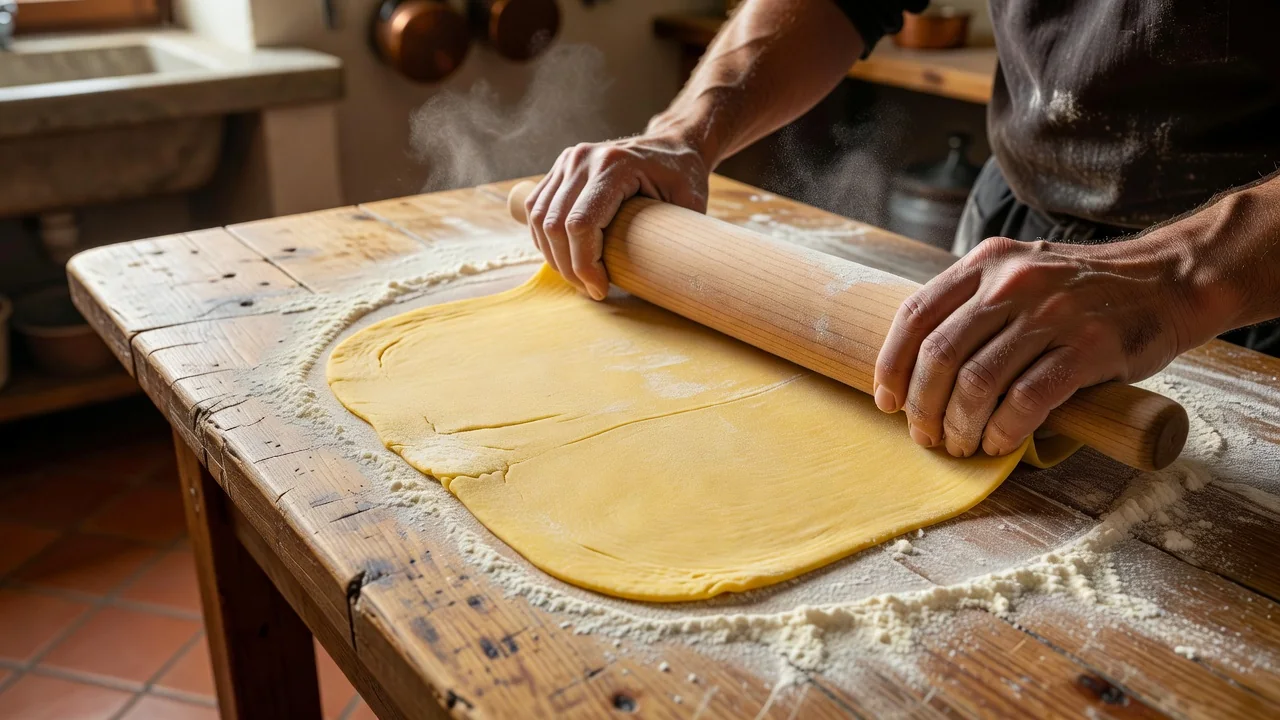
Rolling without a machine
- Divide the dough — small pieces are easier to control.
- Roll from the center outward, turning the sheet a quarter each pass.
- Dust lightly; too much flour makes pasta dry and slippery.
- Target thickness: you should see your hand's shadow through the sheet.
Sauce pairing
Fresh egg pasta wants fat-based sauces: butter and sage, cream, ragù. Save tomato-heavy sauces for dried semolina pasta — its rougher surface holds them better. And the golden rule: finish the pasta in the sauce pan with a ladle of pasta water. Starch binds it into one dish instead of noodles with topping.